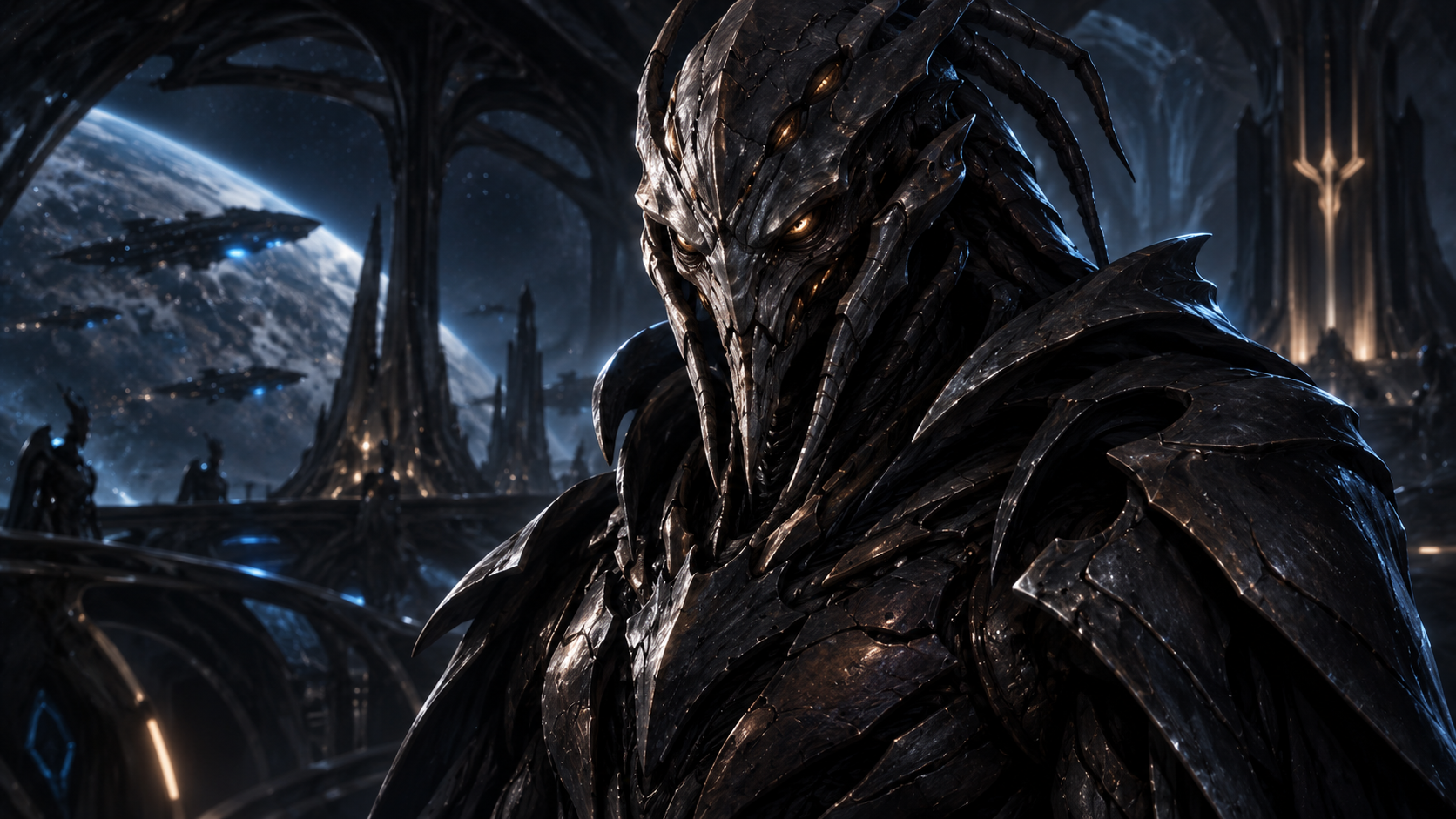
Kharaxis
Kharaxis turns beneath a red star. Its forests grow in vertical layers over fungal oceans, while entire settlements extend underground through chambers that are cultivated rather than excavated. Walls thicken where pressure rises. Transit organs pulse on schedules. What a human visitor might call architecture, agriculture, and anatomy are often the same system.
The Kharaxi did not become a spacefaring civilization by abandoning biology. They taught biology to survive vacuum, carry weapons, remember routes, and reproduce useful structures.
Family, Nation, and Nervous System
Kharaxi society is organized into Broodlines. A Broodline is at once family, state, military tradition, and distributed biological connection. Individuals possess personalities, rivalries, ambitions, and dissent, but they grow inside a cultural nervous system that remembers over spans longer than a single life.
This structure is why human responsibility appears so different to them. Where humans separate a modern colony from a dead corporation, Vek'Thar sees one continuing Broodline wearing new shells.
Living Fleets
Kharaxi ships are bred, grown, armored, and outfitted. Internal organs regulate pressure and heat. Carapace plates accept manufactured reinforcement. Weapons may begin as specialized organisms and end as engineered systems integrated into a living hull. A damaged ship can bleed, scar, adapt, and remember stress.
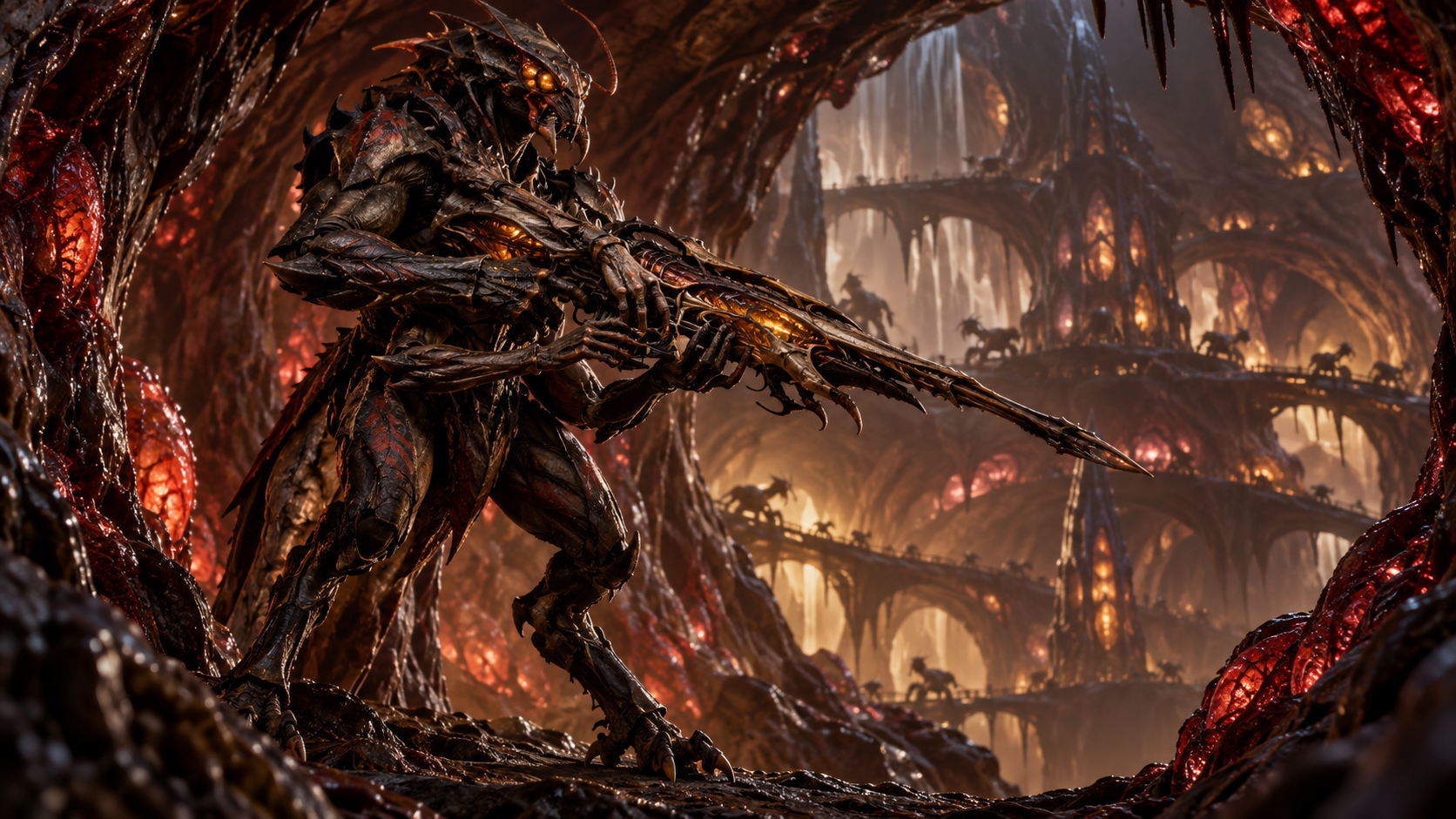
Thryx
Thryx is a living structural material central to Kharaxi civilization. It can be cultivated into forms that combine strength, flexibility, and biological compatibility. To the expedition that reached Kharaxi space, it was an extractable resource. To the Broodlines, it was inseparable from habitats, ships, nurseries, and the continuity of life.
The Burning Brood
A human corporate ancestor entered Vek'Thar territory to take Thryx and destroyed a nursery complex during the operation. The loss became the Burning Brood. Humanity suppressed the record until the crime became obscure even to the people who inherited its consequences. Vek'Thar shaped generations of long-range organisms around crossing the distance to answer it.
Not every Kharaxi supports the assault on Earth 3. The species is not synonymous with Vek'Thar, and Broodlines can oppose one another. The invasion is the decision of a powerful military lineage, not proof that every Kharaxi mind desires extermination.
Known Combat Castes
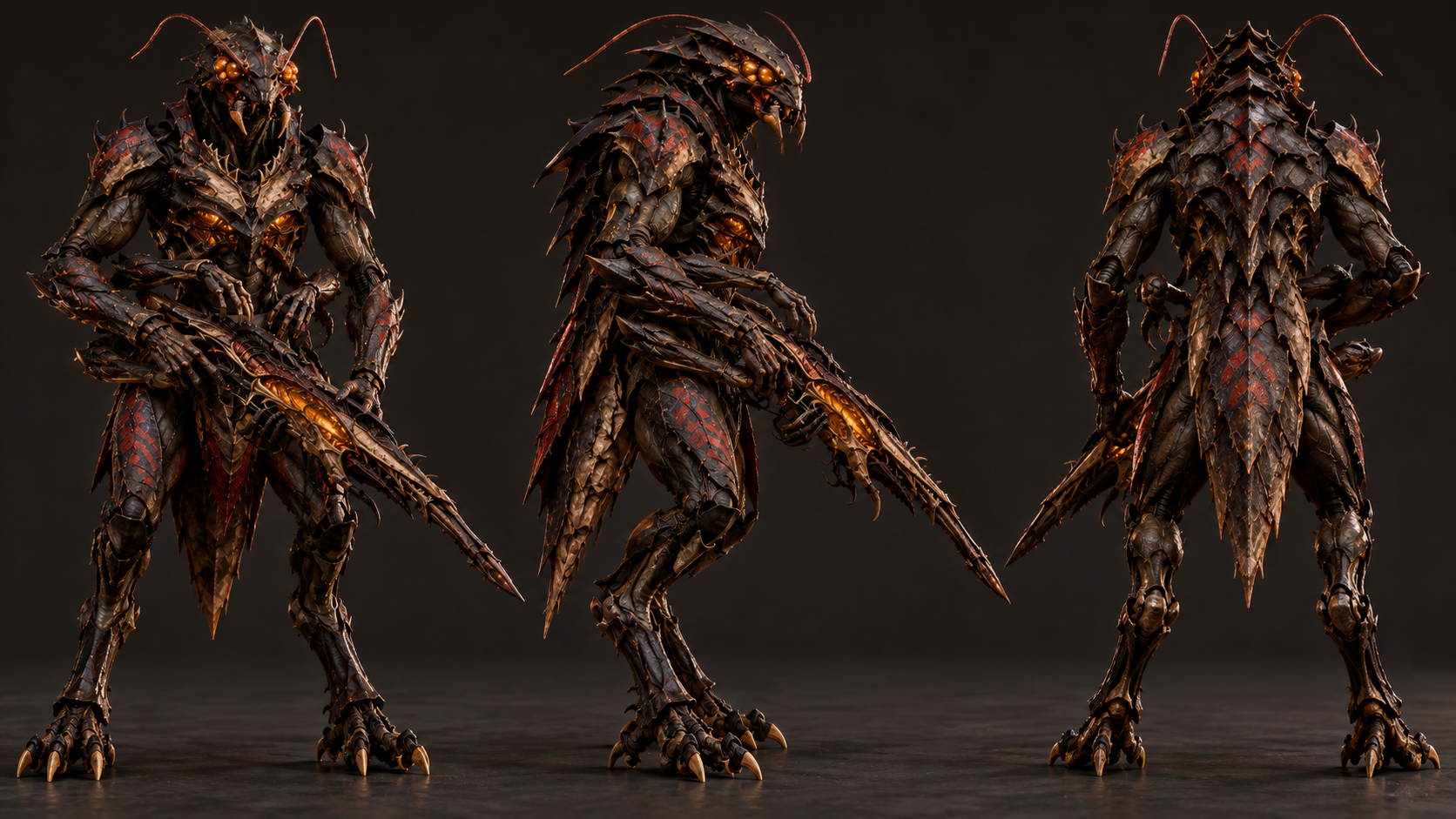
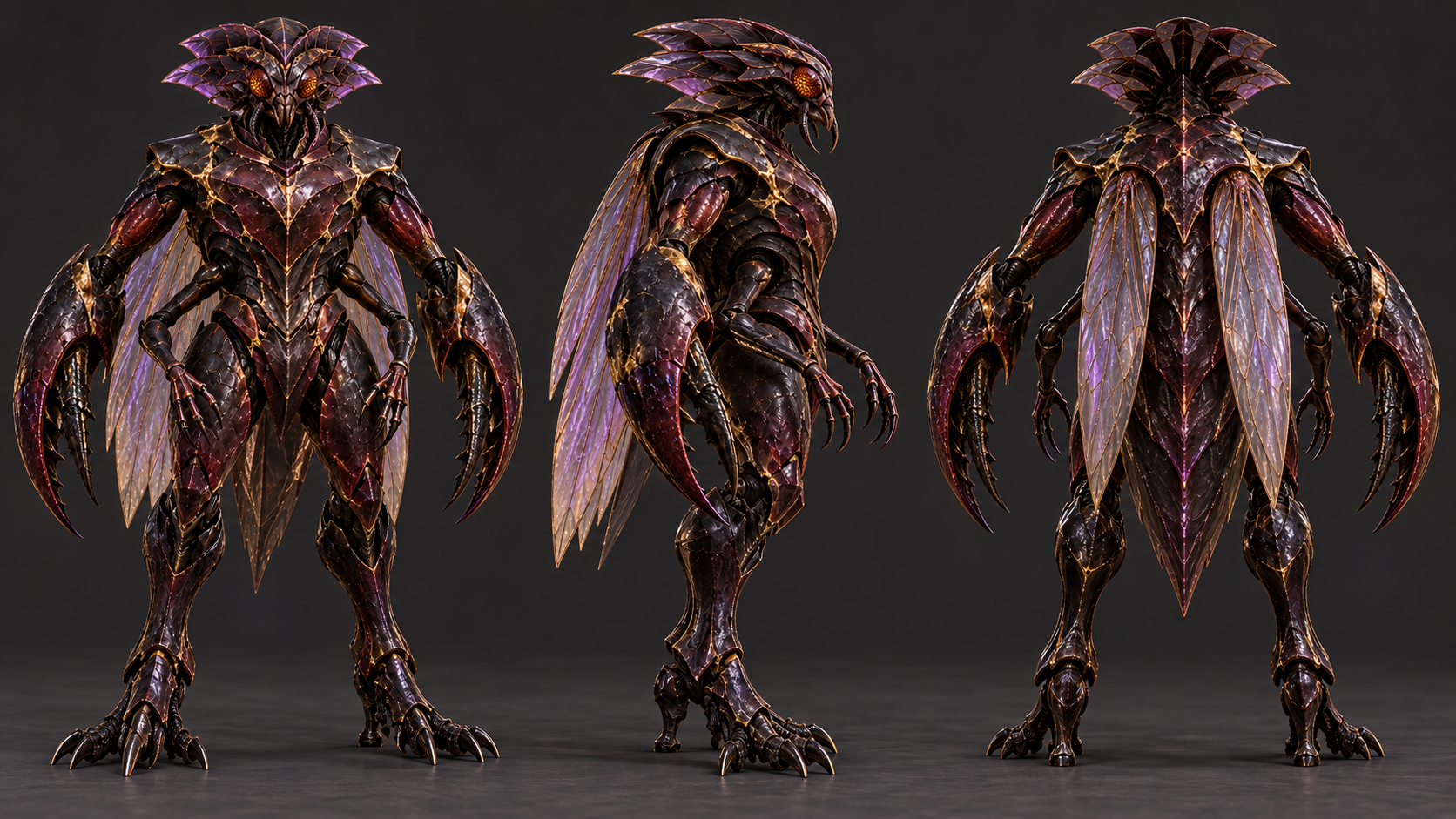
- Skitterlings — fast, expendable organisms used to probe movement and overwhelm attention.
- Drones — the durable center of ordinary attack formations.
- Spitters — ranged organisms that project corrosive or energetic payloads.
- Carapace Guards — armored defenders built to absorb fire around more valuable castes.
- Brood Hunters — pursuit organisms adapted to isolate and pressure selected prey.
- Brood Mothers and War Queens — command organisms that coordinate production and battle behavior.
- The Vek'Thar Matriarch — the highest known authority within the attacking Broodline.
The Silent Queen
Vek'Thar senses the Machine Core through traces distributed across human space. Its dormant scale and network behavior resemble a queen that refuses to answer. That interpretation adds urgency to an invasion already powered by grief: Earth 3 is both debtor and doorway.