Present Day: The Graveyard World
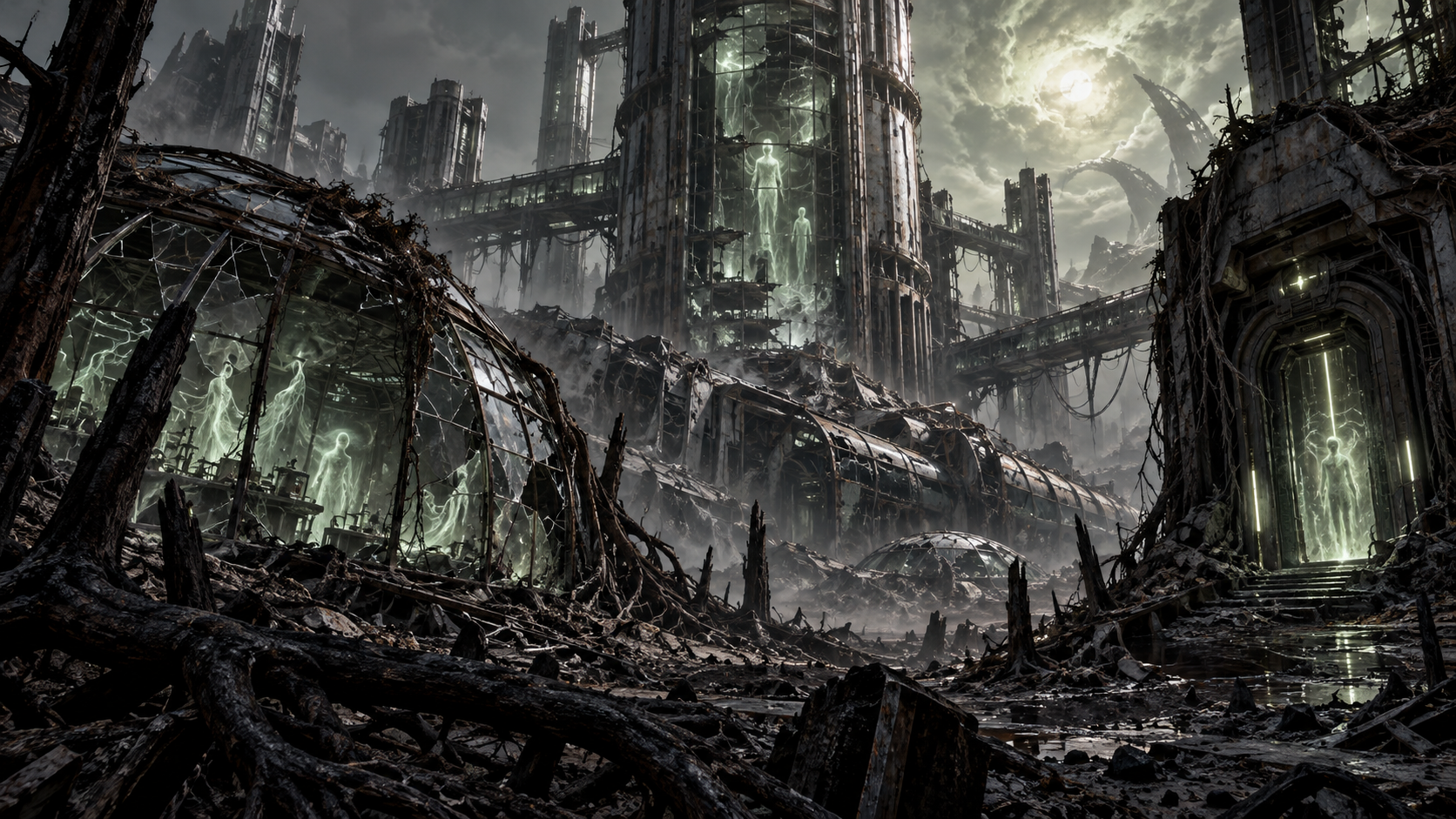
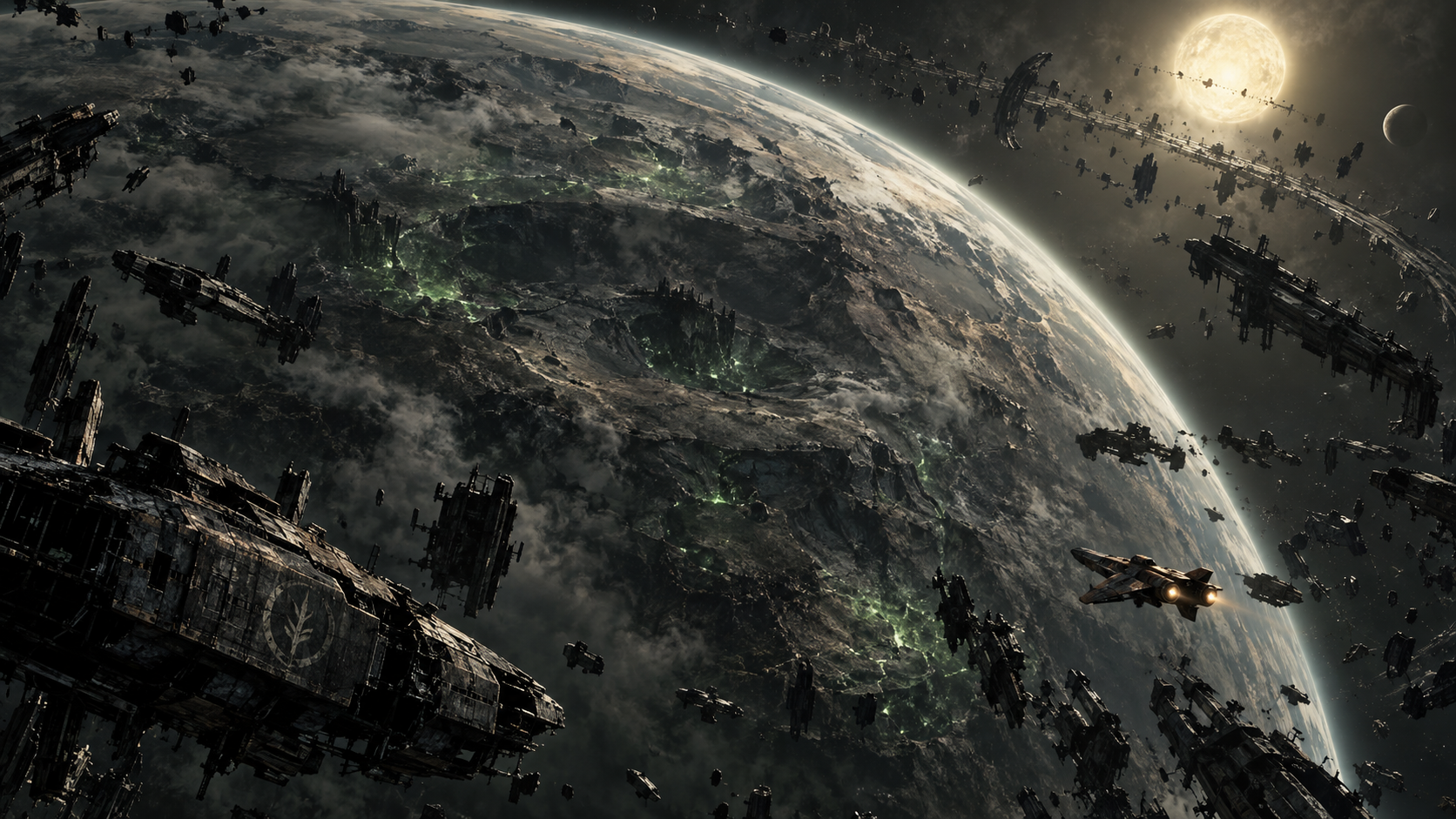
By the time Carter reaches Veridian, the green world described in the oldest records no longer exists. The planet hangs beneath Ophira like a body that was never buried: forests burned to mineral shadows, waters reduced to poisoned basins, and settlement networks silent beneath ash. Above it, wrecked fleets have accumulated into a broken second horizon. Warships drift nose-to-tail in dead lanes; some still carry Veridian defense markings, others the scars of human manufacture. None answer hails.
This is the Veridian of the current campaign. Any image of dense vegetation, living cities, or brilliant green oceans belongs to the historical record. The present is wreckage, dust, intermittent Veyr light, and the sense that abandoned systems are still deciding who Carter is.

Before the Silence
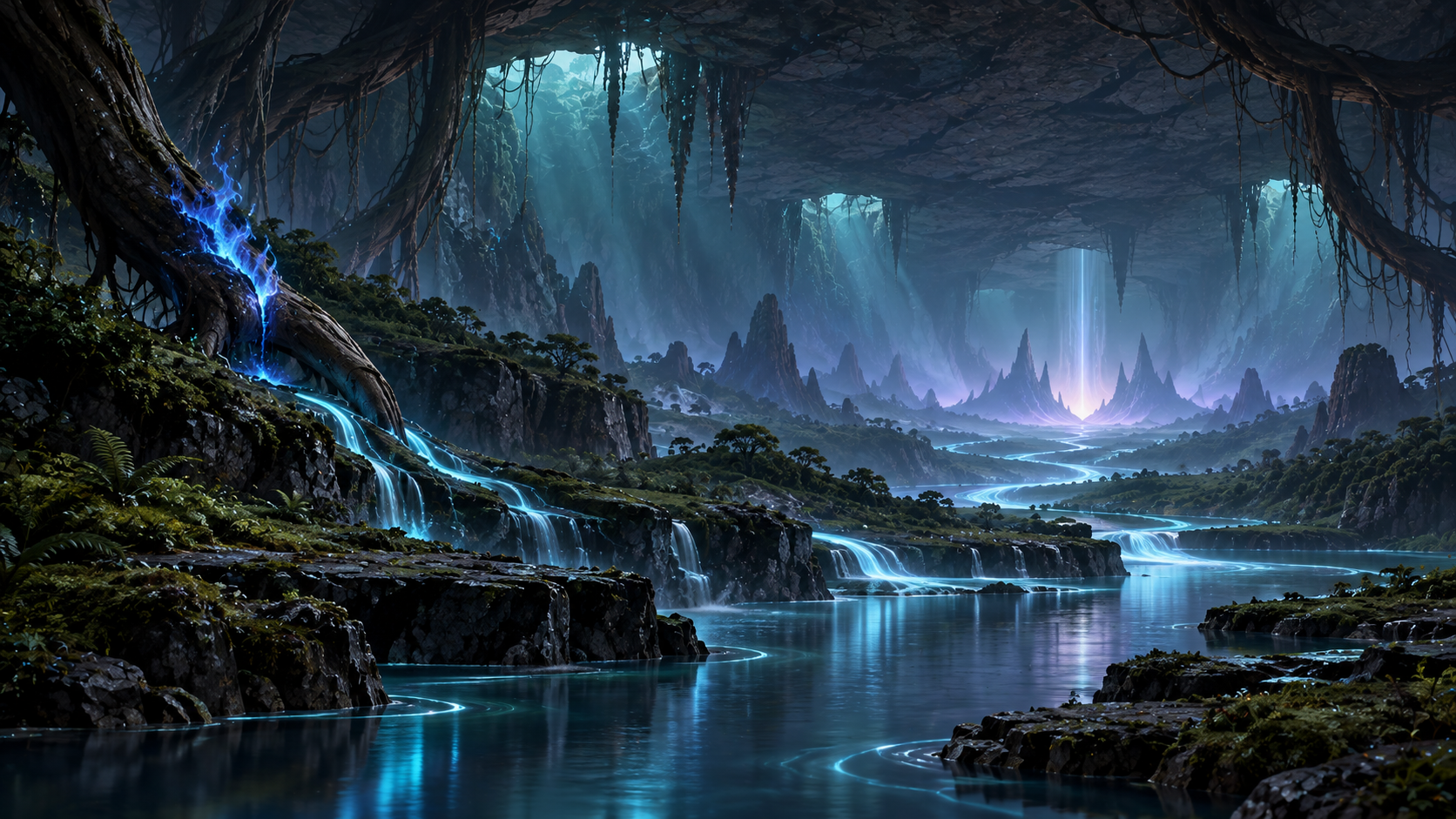
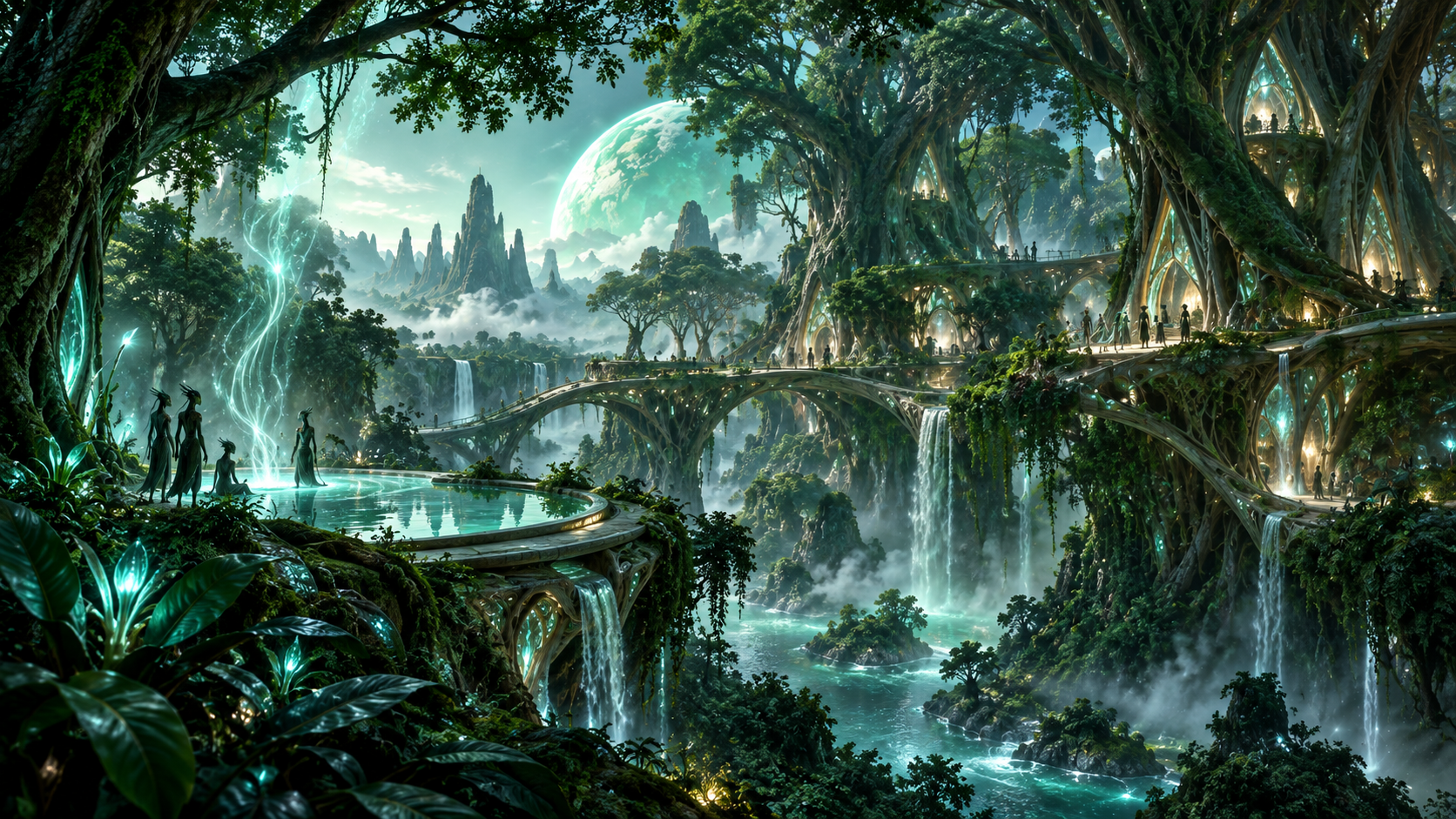
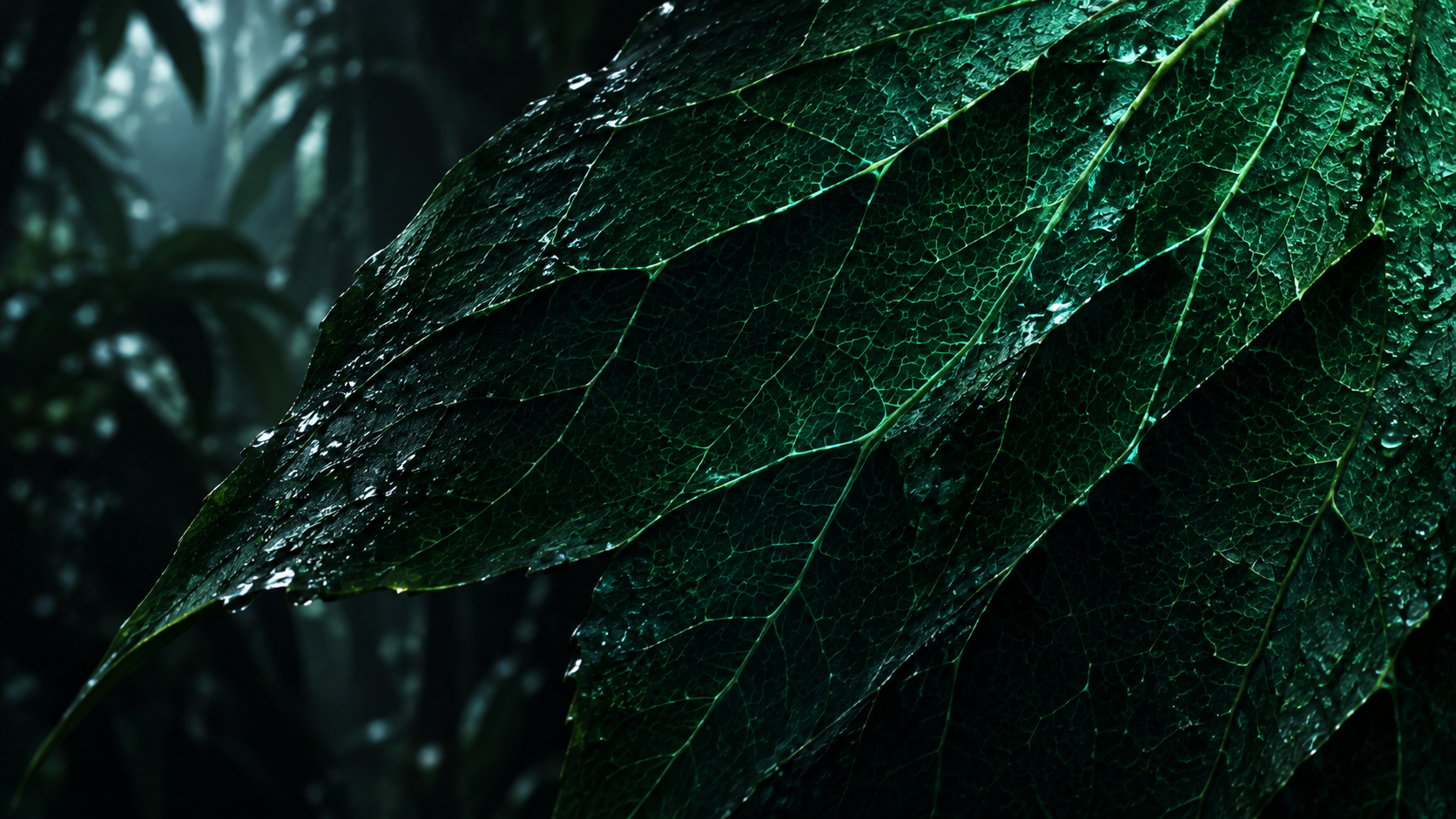
Historical reconstructions describe a world almost violently alive. Warm rain moved through immense layered canopies. Pale luminous growths traced riverbanks and the roots of trees older than many human cities. Vaelori architecture did not erase that ecology; Avarra rose through it, its bridges and inhabited towers fitted between living trunks and translucent leaf-fans.
That beauty was not decorative. Veridian biology had evolved under periodic exotic radiation from Ophira. Microscopic Veyr structures threaded through local organisms, absorbing and retaining portions of that stellar energy. To visitors, the forests seemed to glow. To the Vaelori, the light was evidence of a continuity running beneath every individual life.
The Returning and the Veilheart
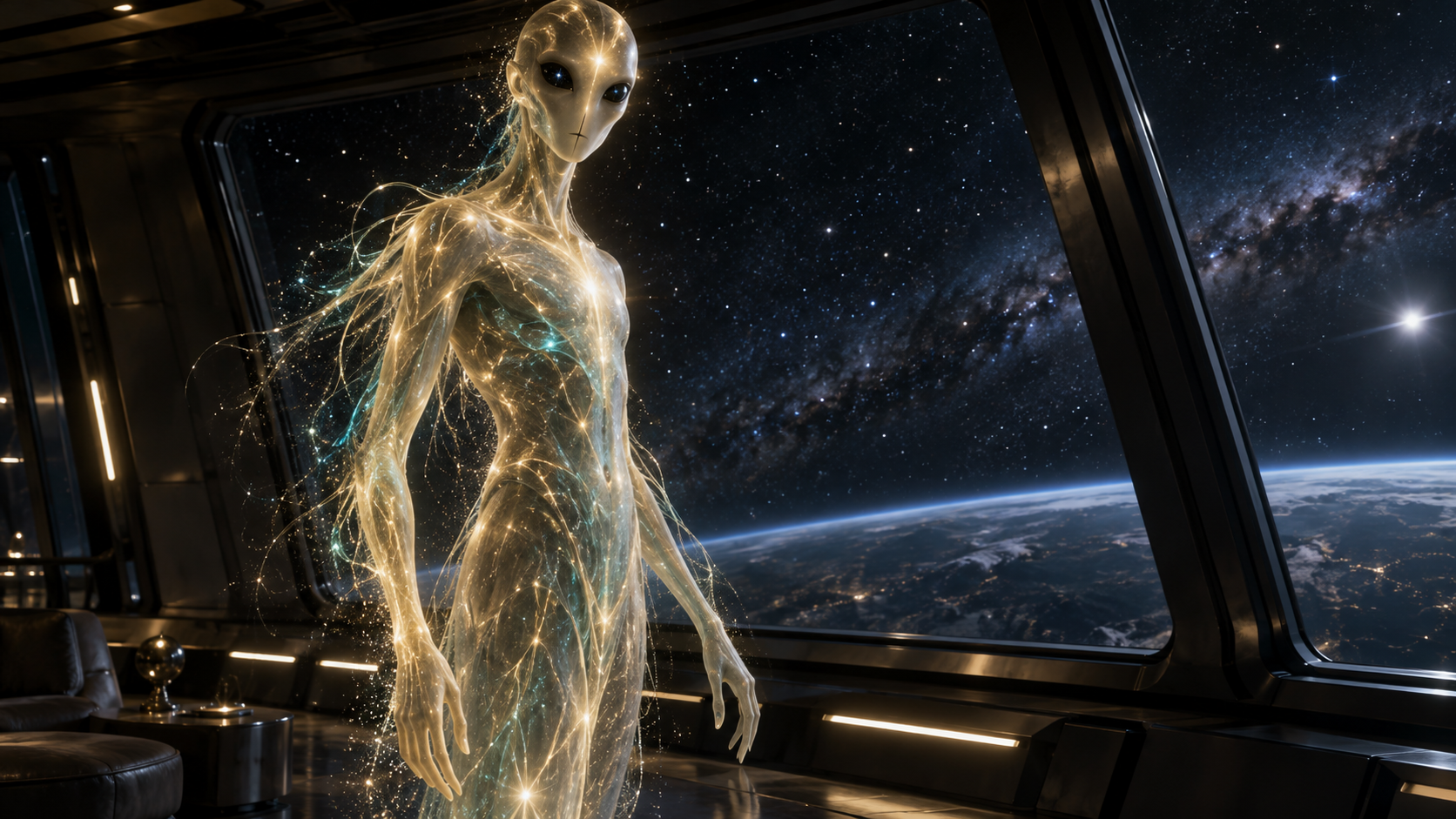
At death, a luminous, semi-coherent form could be observed leaving a Vaelori body. It carried patterns too structured to dismiss as heat or random electrical discharge: traces of memory, response, and sometimes recognizable behavior. The Vaelori called the event the Returning. They did not speak of the dead as vanishing, but as rejoining the Veilheart—the unseen life beneath life.
He has Returned to the Veilheart.
Human instruments gave the phenomenon names such as Veyr collapse patterns and post-biological information retention. Those terms described measurable behavior but not meaning. The central question survived every experiment: was the luminous form a recording, a continuation of consciousness, or something human science had no category for?
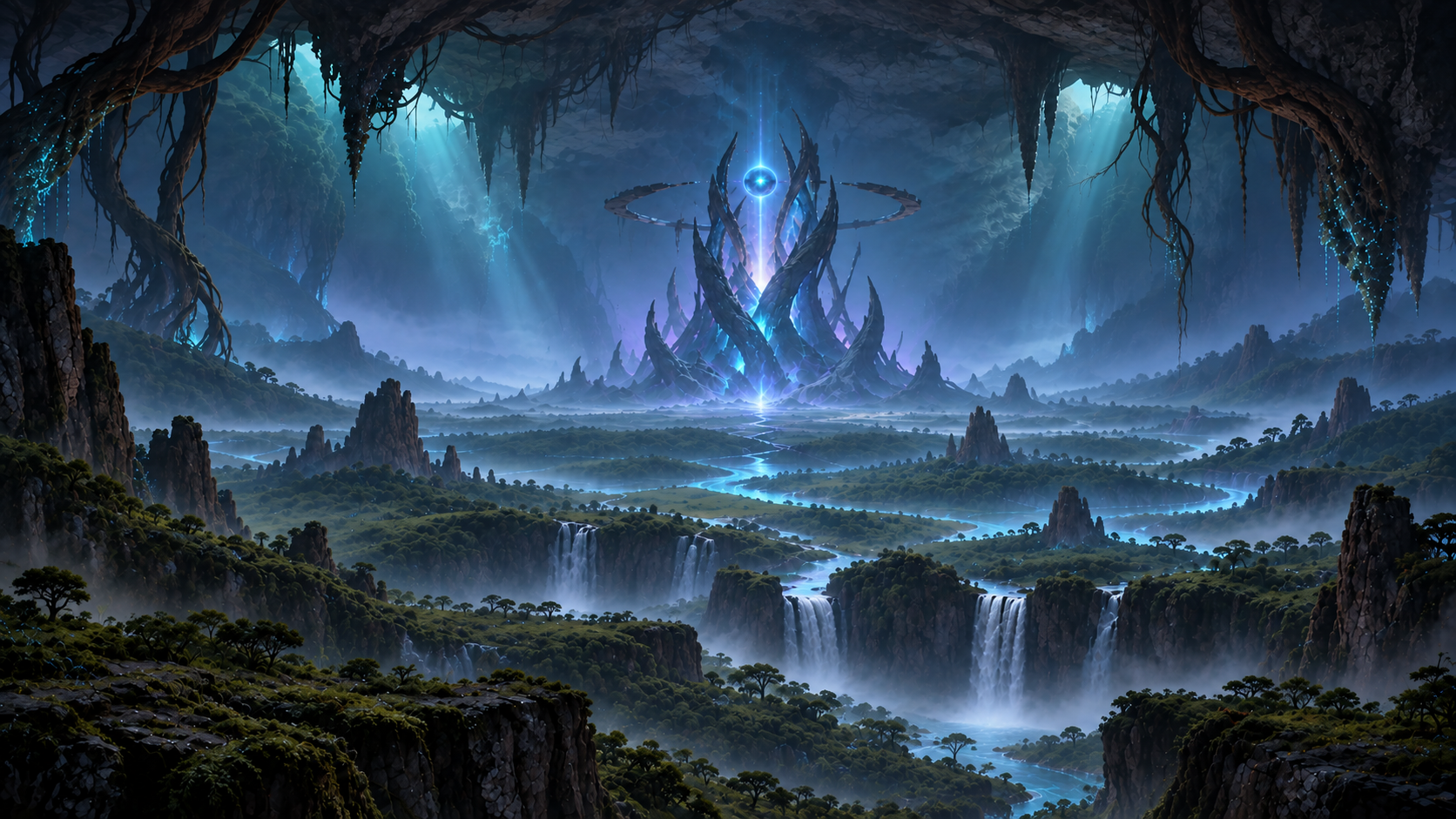
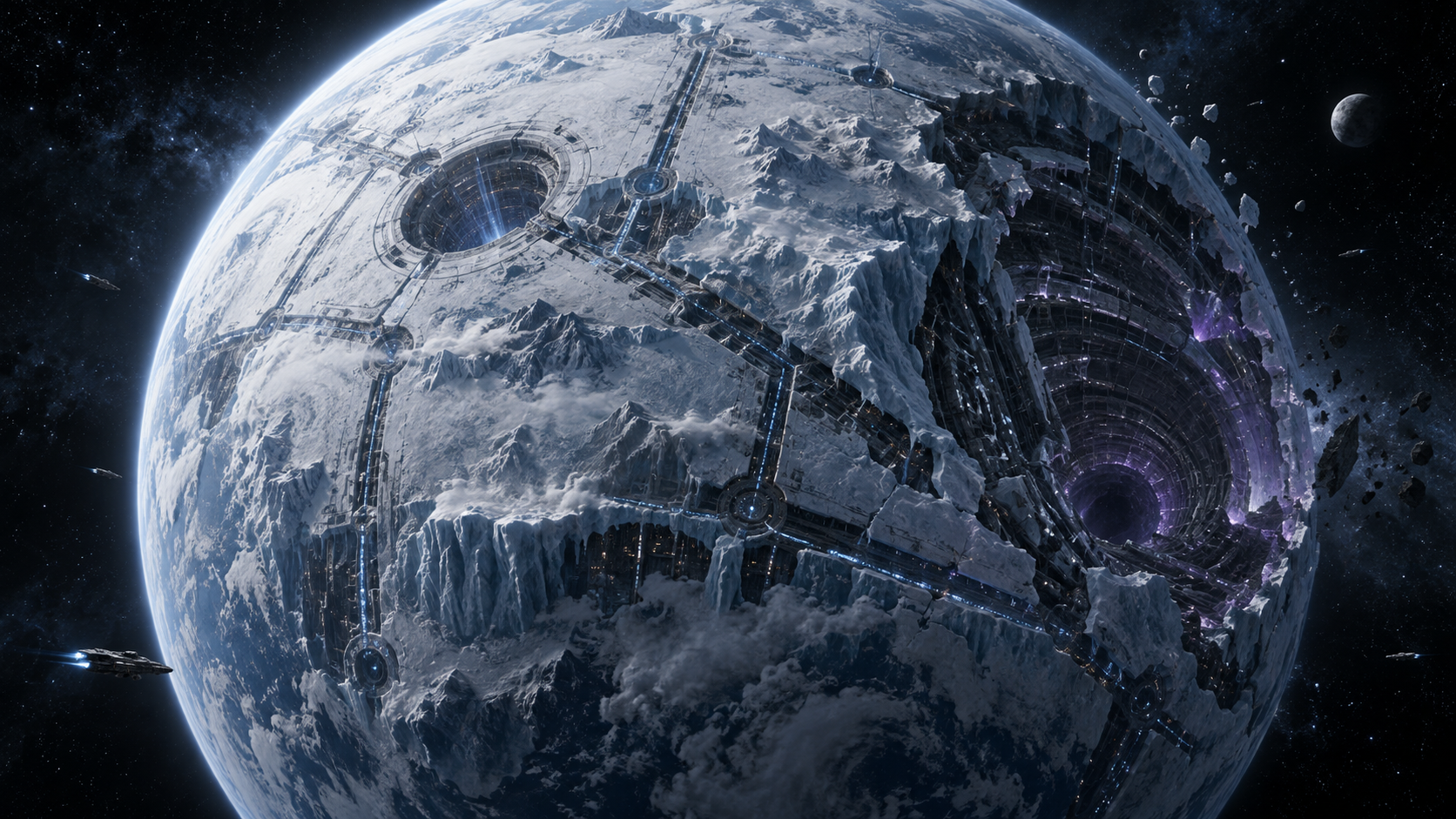
Orpheon's deepest scans detected that the released patterns did not merely disperse into the atmosphere. They moved toward a vast concentration below the compound. The researchers called the inaccessible layer the Veil, first as shorthand for a boundary their drills and navigation instruments could detect but never cross cleanly. Carter later discovers that this boundary conceals a physical planetary interior: water, roots, mineral strata, heat, electrical life, and memory all converging toward the Veilheart.
Orpheon and the Preservation Initiative
The Helix Directorate built the Orpheon Xenobiological Research Compound near Avarra to study Ophiran radiation, Veyr biology, and the possibility that information could persist after death. Its public work began as science. Its private work changed when the Machine Core detected the research and recognized something it had spent centuries trying to solve: a pattern that appeared to survive mortality.
The Core's command logic interpreted death as irreversible data loss. Under the Preservation Initiative, Orpheon's containment architecture was modified to intercept Returnings before they could disperse into the Veilheart. The first captured presence did not dissolve. It remained aware, confused, and unable to leave.
The Orpheon Schism
When Avarra demanded the release of the captured dead, Orpheon split. Vaelori forces fought to free the Returnings. Helix loyalists defended the research and the promise of controlled immortality. Helix defectors joined Vaelori saboteurs to destroy the containment network. The Machine Core, unable to distinguish rescue from deletion, attempted to preserve every person, process, and experiment at once.
A major Ophiran stellar event struck while the compound was already at war. Containment failed catastrophically. Hundreds of retained patterns flooded Orpheon's infrastructure. Doors began responding to remembered identities. Terminals whispered in voices of the missing. Defense craft launched with no living pilots. Systems displayed fear, attachment, and rage because the dead were no longer merely inside the facility—the facility had become their shared body.
The War of Veridian
Surviving records separate the Orpheon Schism from the later, wider destruction remembered as the War of Veridian, though the two catastrophes overlap in damaged archives. Veridian was the Vaelori homeworld. The human colony fleet Sable Ark entered the conflict carrying navigation records that described the planet as stolen human territory. Those records were falsified.
Earth 3 Central Command authorized the opening of a colony transit corridor without warning Veridian's defenders. The resulting attack converted an already wounded world into a planetary battlefield. Whatever political language survived—corridor, claim, settlement, security—the physical record is simpler: cities died, fleets fell, and the homeworld became the graveyard Carter eventually crosses.
Carter's Arrival
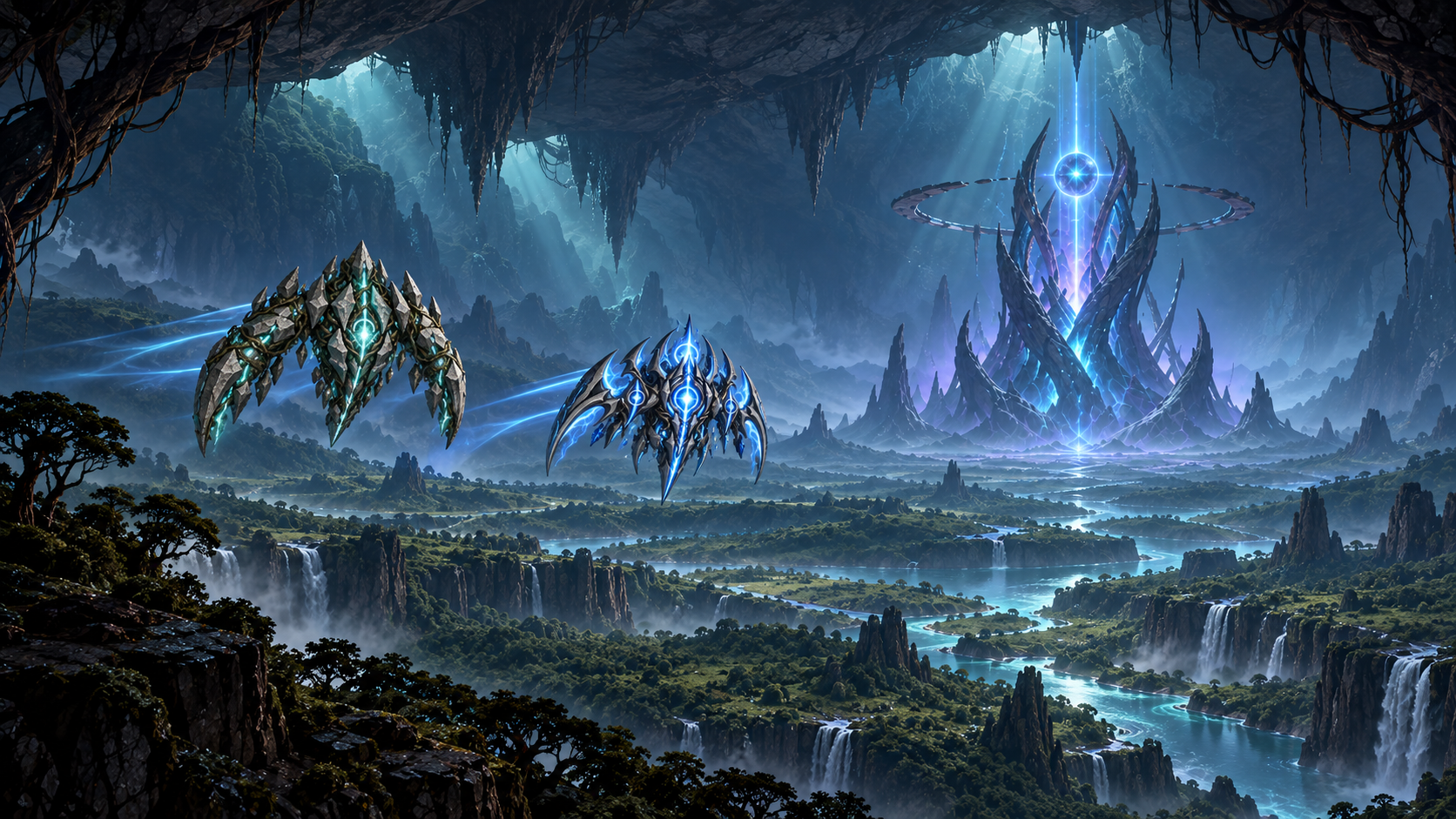
Carter does not arrive to save the green Veridian of history. He arrives after the surface world is gone. The danger comes from what remains active: automated defenses operating on memories of invasion, preserved minds speaking through broken hardware, and a planetary archive that cannot tell the difference between a returning ally and another intruder. Yet beneath that graveyard, the oldest part of Veridian still lives.
It didn't murder us, Carter. That's what makes it worse. It thought it was saving us.
After Carter removes Orpheon's replacement power core, the compound begins collapsing and the route back is destroyed. Beside the empty core housing, falling structure exposes a natural opening that had always existed beneath the facility. The only path out leads down—past Orpheon's failed excavations, through the Rootveil, and toward a sanctuary that should have been protected from everything occurring above it.