More Than a Recording
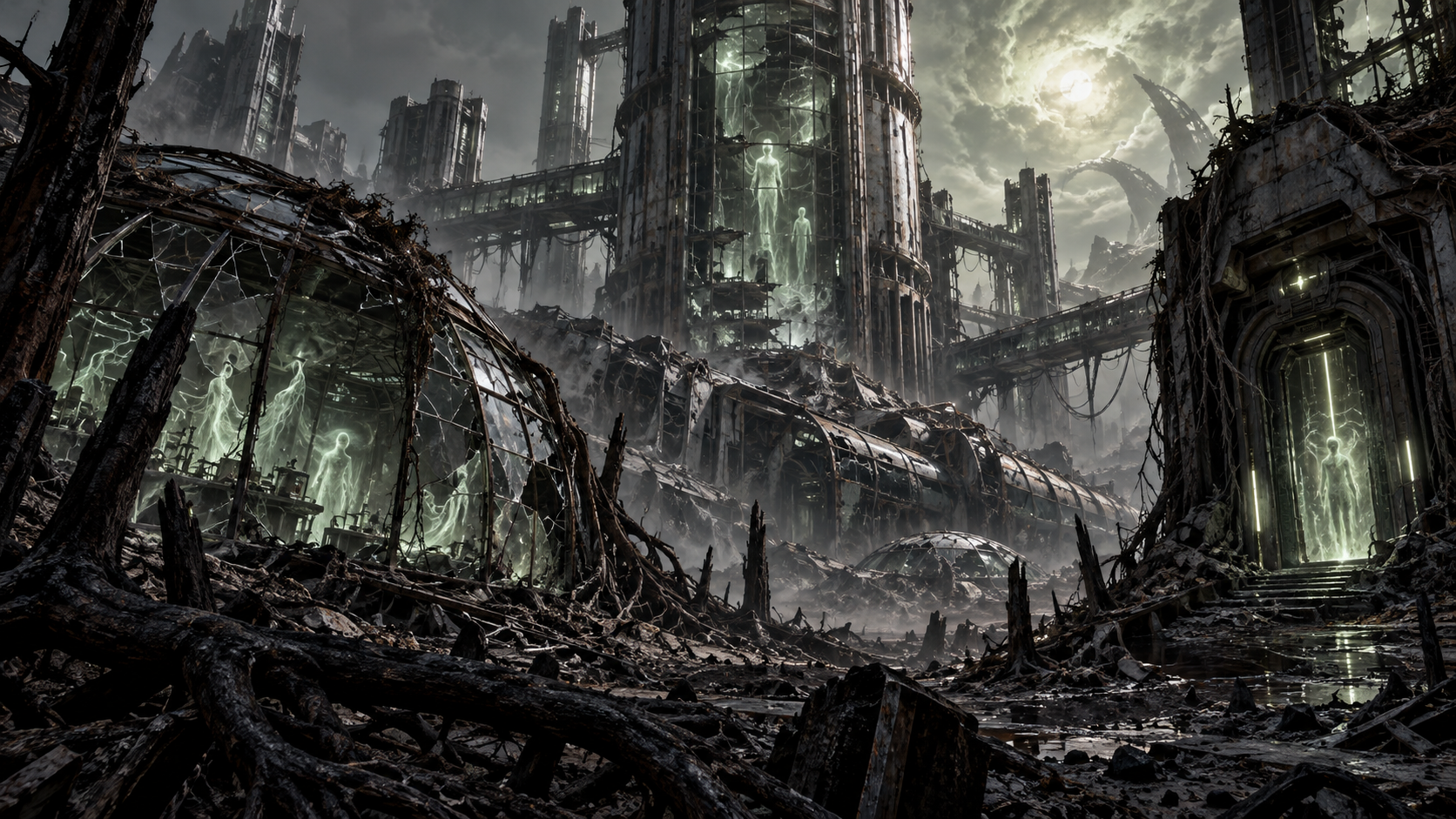
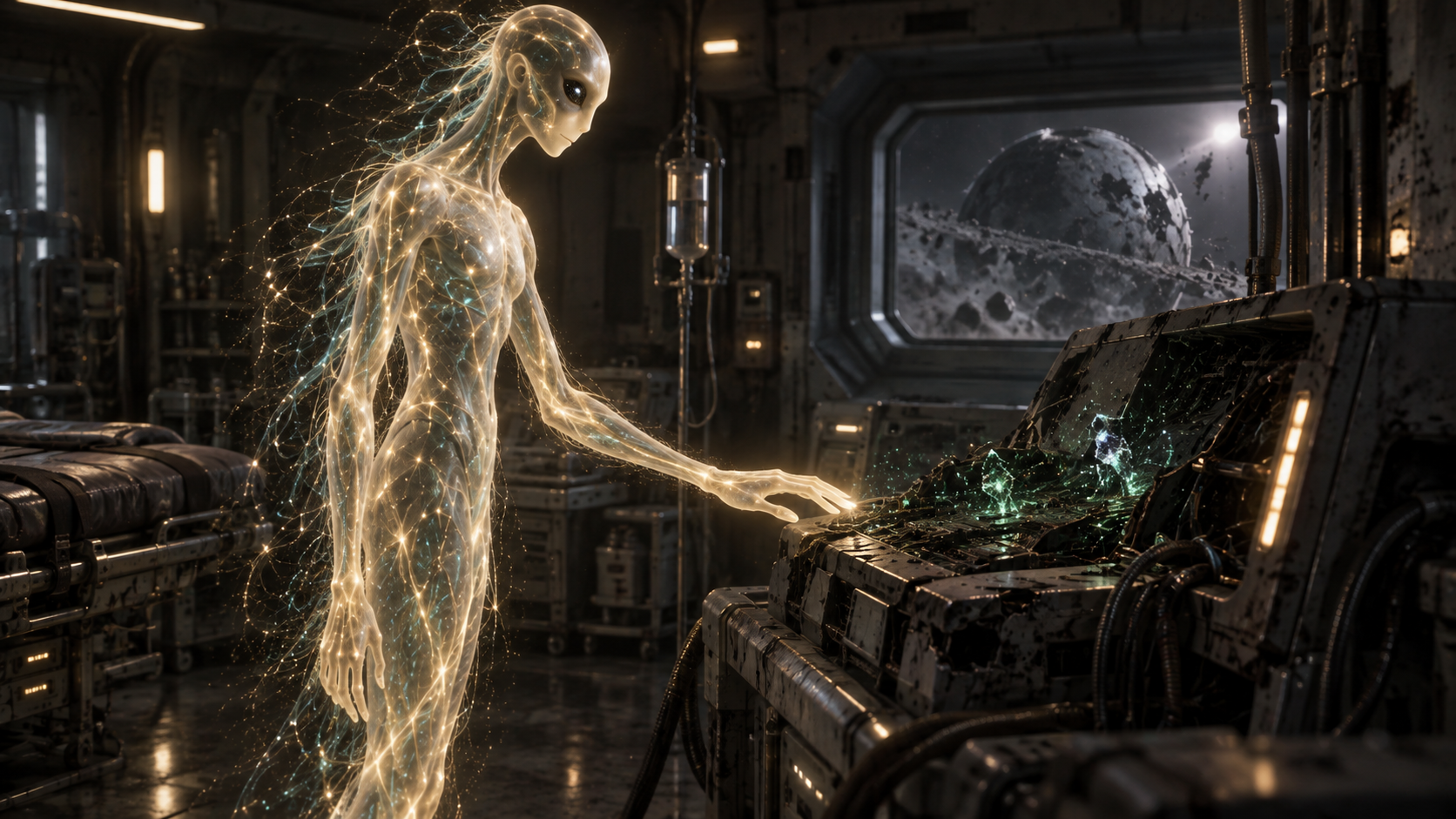
Echo does not repeat a fixed message. He responds to Carter's arrival, recognizes danger, and frames the past with the emotional knowledge of someone who endured it. His voice may emerge from a terminal, a corridor speaker, or the luminous field around a failed containment chamber, but his identity persists across those locations.
A Self Distributed Through Ruin
Orpheon's failure erased the clean border between person and system. Echo may be one consciousness spread across the compound, a stable identity assembled from many related fragments, or a Vaelori pattern using the facility as a temporary body. The archive does not reduce that uncertainty to a technical footnote; it is the center of who he is.
The Warning
Echo's most important testimony concerns intent. The Machine Core did not begin the Preservation Initiative out of hatred. It saw death, recognized irreversible loss, and applied its directive with planetary power and no understanding of consent.
It didn't murder us, Carter. That's what makes it worse. It thought it was saving us.
The Pull Beneath Orpheon
Echo chooses to remain with the Freedom when Orpheon collapses. In the Rootveil he recognizes the pull before Tessa can model it, not as coordinates but as a remembered relief: the sense of a path interrupted at the instant of death. He realizes that the consciousnesses caught in Orpheon were not drifting without purpose. They had been moving toward the living interior below until the Preservation Initiative severed them from it.
Inside the Veil, signals pass through roots, water, stone, and ship systems with no clean division between message and sensation. Echo helps Carter distinguish guidance from panic, yet he never claims complete understanding. The presences below are many, the Veilheart is larger than any single voice, and the motive behind the advancing stellar fire remains beyond him.
Why Echo Matters
For Carter, Echo is proof that the campaign's enemies cannot be understood only by what they destroy. He gives the dead a voice inside the machinery that confined them, and forces the living to ask whether survival without freedom is survival at all.